

Montessori
A purposeful, child-centered approach that builds independence, concentration, confidence, and a lifelong love of learning.
The Montessori Foundation
Pine Street School begins with Montessori. In our earliest years, children develop the independence, concentration, and confidence that prepare them for the inquiry-based learning of the IB Primary Years Programme.
Montessori respects how young children naturally develop and learn. As an American Montessori Society Member School, Pine Street School brings these principles into thoughtfully prepared early childhood classrooms where materials, routines, and interactions are chosen to support each child’s development.
The Principles That Guide Us
Grace, Courtesy, and Community
Respect for oneself, others, and the environment is central to Montessori. Through everyday interactions, children practice kindness, empathy, responsibility, and care for their shared space. These early experiences help shape the culture of the wider school.
.JPG)
Where Montessori Meets the IB
Montessori and the IB share a belief in the capable, curious child. Beginning in Preschool 3, Montessori-inspired materials and opportunities for independent work sit alongside the transdisciplinary inquiry of the IB Primary Years Programme. Children make purposeful choices, investigate questions, and take increasing responsibility for their learning.
The independence and concentration developed through Montessori provide a natural foundation for the collaborative, inquiry-based learning of the PYP. Families can see this progression across our Nursery and Preschool programs.
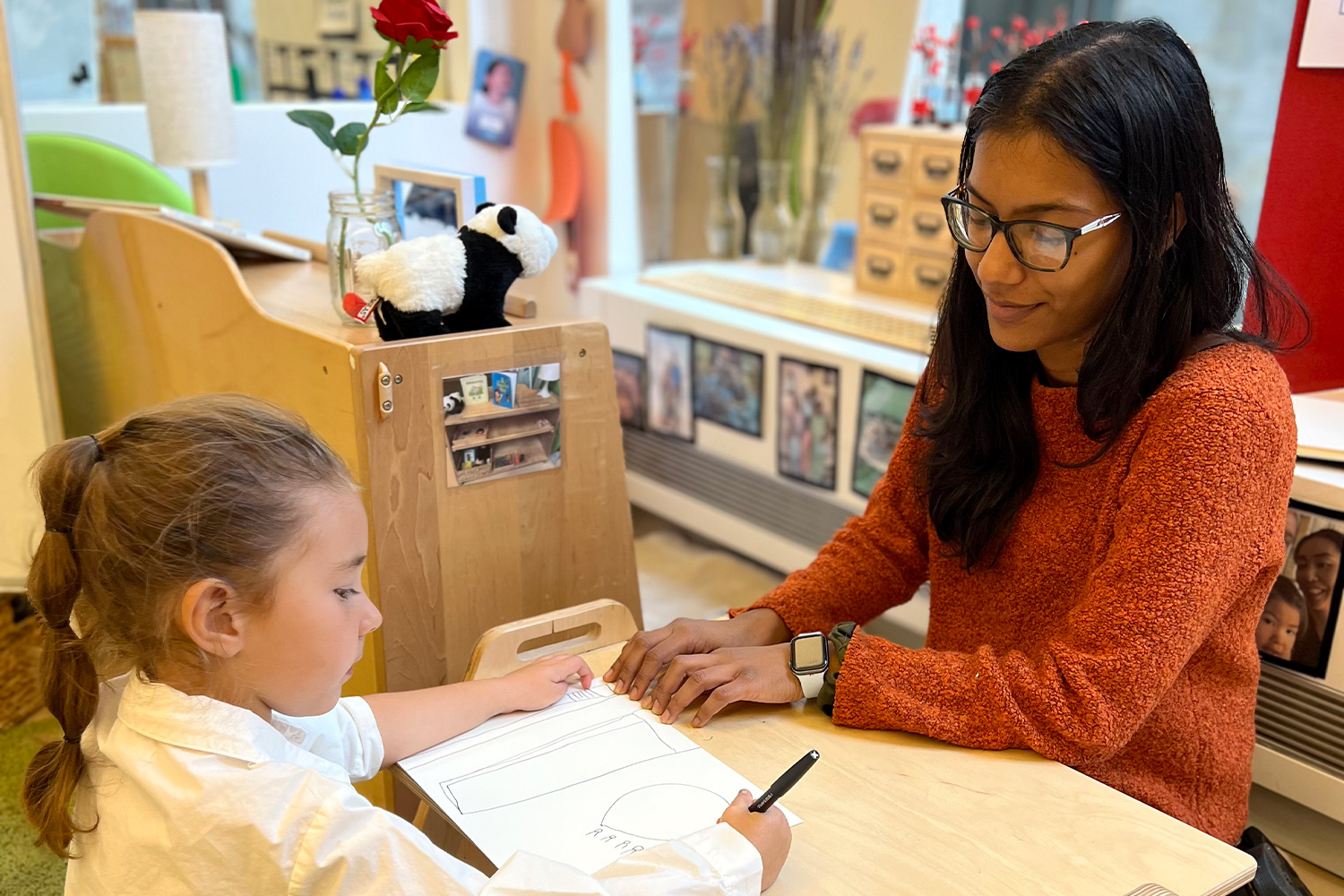
Montessori principles are strongest in Nursery and Preschool. Beginning in Preschool 3, Montessori-inspired materials and opportunities for independent work continue alongside the IB Primary Years Programme.
Montessori principles shape the early childhood years. Beginning in Preschool 3, the IB Primary Years Programme is introduced and continues through Grade 5, building on the independence, concentration, and responsibility children developed through Montessori.
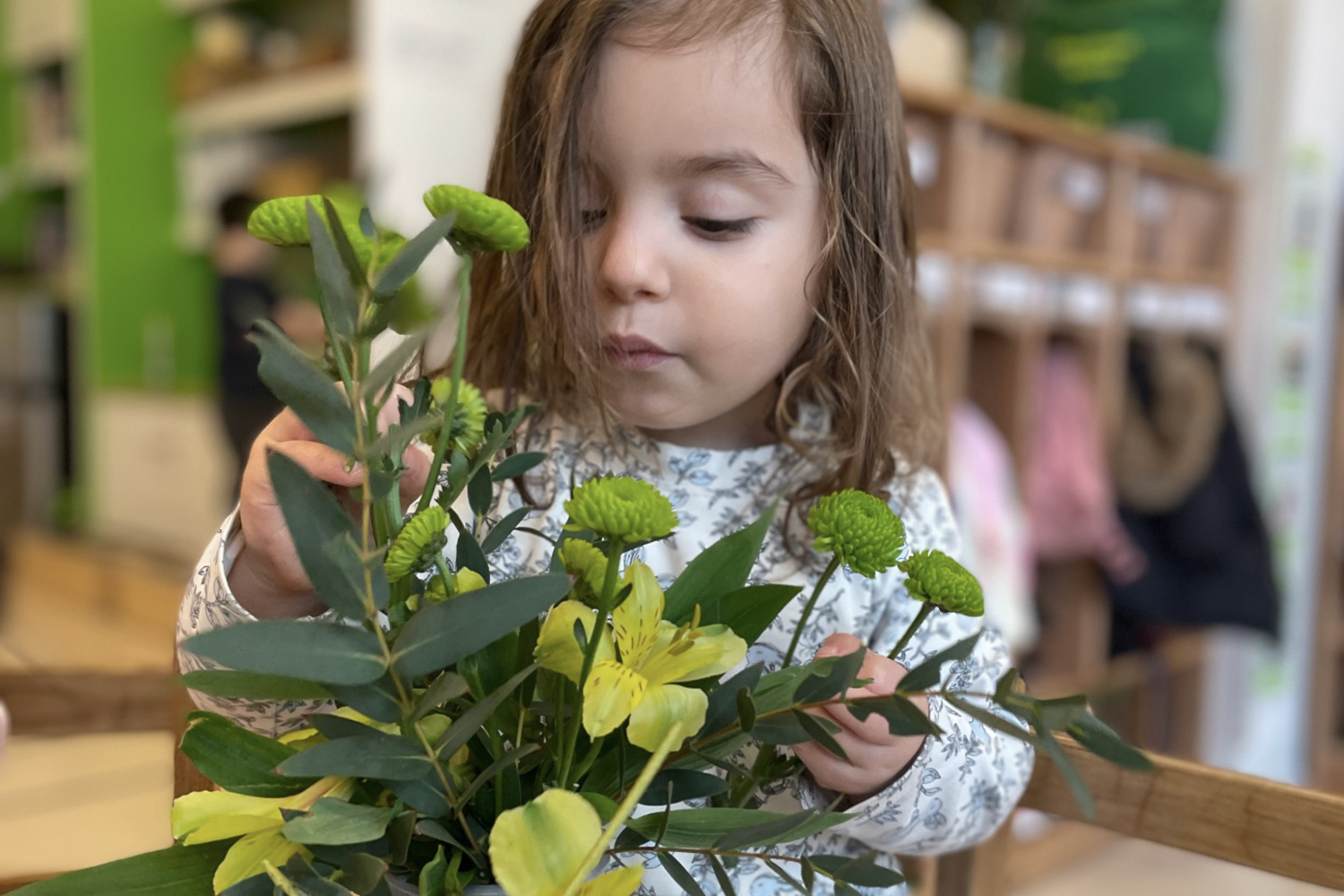
A prepared environment is a calm, orderly classroom designed so children can make choices, explore independently, repeat meaningful work, and build concentration. Materials, routines, and spaces are intentionally selected to support development.
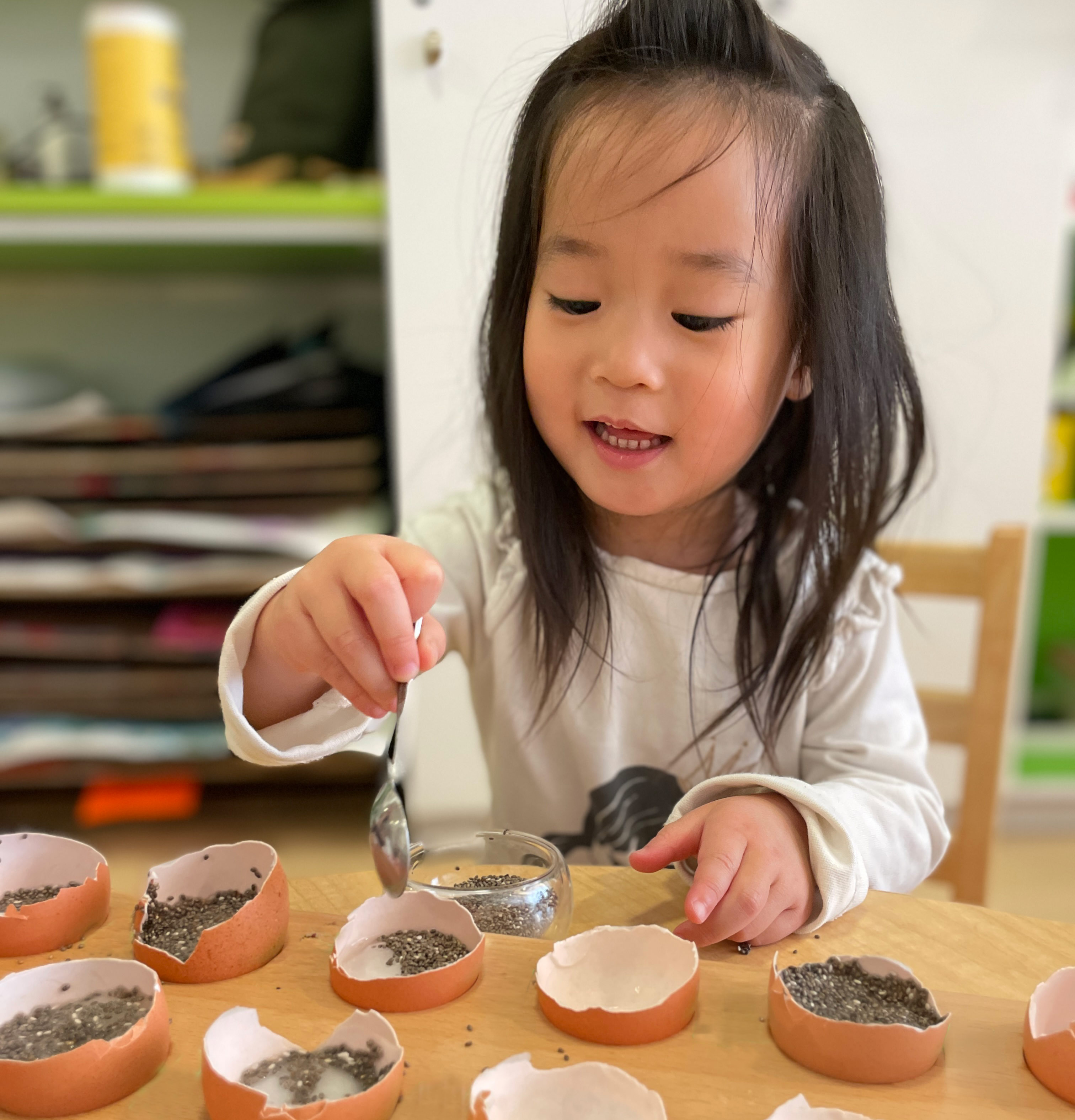
Practical Life includes purposeful everyday activities such as pouring, wiping, spooning, sweeping, washing, buttoning, and caring for the classroom. These experiences build coordination, concentration, independence, responsibility, and confidence.
For young children, work and play are closely connected. Children learn through movement, repetition, exploration, relationships, joy, and purposeful activity, while teachers observe and introduce experiences that support development.
Grace and Courtesy are part of daily classroom life. Children practice kindness, empathy, respect for others, responsibility, and care for their shared environment through routines and everyday interactions.
Montessori develops habits such as concentration, purposeful choice, independence, persistence, and responsibility. These habits help children take an active role in the collaborative, inquiry-based learning of the Primary Years Programme.